
Authentication Project: Secret Page App Part Two (Sign Up Page)


Sign Up Page

After a complex set up process, finally we can start to write our routes!

Step One: Write register route

We will write our register route which will render to a "register" page. In this page, it will have a simple sign up form.


Step Two: Create Sign up form

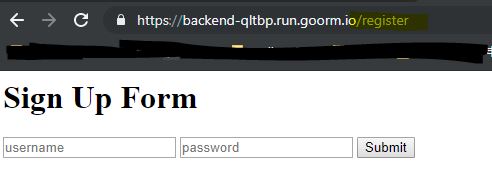
We add "register.ejs" in the "views" folder. Then, we create a simple form which the url link will be "/register".


Then, we run the app.js and get the "/register", so we can see the form.

Step Three: Set up body parser

For every form post request, we need to add body parser to make it work.


Step Four: Handle user sign up

Once users sign up, it will lead them to the secret page. Therefore, we need to write a post route. Inside the post route, we add passport authenticate, which will log the user in and store the correct information and run the serialize method. And we specify to use "local" strategy


I sign up with two user names: chai and tom. Then, I find my username in the mongodb database.


Then, once I sign up, it shows the secret page.


Comments

Popular posts from this blog

Intermediate Express.js: How To Add Styles & Partials in EJS File?

So far, we only have simple HTML tags and ejs tags in each ejs file. Every template page has no style at all. And the basic HTML header and footer are also missing. Today, I learned how to add styles and partials in ejs file. Link Style Step One: Touch a Separate CSS file I create a new directory "Style" under the "EJSDemo" directory, then I add a new CSS file "app.css" inside "Style" folder. Step Two: Add app.use(express.static()) in the app.js I add app.use(express.static("style")) in the "app.js". This will tell Express.js to serve the content of "Style" directory. Step Three: Write styles in CSS file I simple give body an orange background color and set text color to be grey. Step Four: Link to CSS file in the EJS file I just add <link> tag to link the "app.css" file on the top of the h1 tag in each ejs template. As the result, when I run the app and...

Seven Most Common jQuery Methods Last Part: ADD/REMOVE/TOGGLE CLASS()

Add, remove and toggleClass is also a very common way to manipulate style. .addClass() and .removeClass() I add two class selector in the style tag. Class one is to change text color to be green, and class two is change both text and background color.  Now I refresh the page and change h1 text to green by using addClass() method: $("h1").addClass("one") .  If you want to remove the style, you can change it to removeClass("one"). I do the same thing to the list. I change the list color and add a background color by adding the class two style value: $("li").addClass("two") . .toggleClass()  According to jQuery, toggerClass method can add or remove one or more classes from each element in the set of matched elements, depending on either the class's presence or the value of the state argument. I only want to change the first list item color and background by writing: $("li").first().toggleClas...

My Story: A Mommy Start To Learn Code From Zero

From Google Image I am not a programmer, and I thought I would never become one. Everytime I see someone is coding, I think he or she must be very talent.  For me, coding is a very difficult subject to learn. Not only the language has so many rules, but also the logical reasoning behind the language is complex.  In my graduated school, I knew many friends who didn't have any coding background, but they are doing programmer or developer jobs now. Some of them went to school to study coding, and some of them  learned to code by themselves. Their stories are so impressive.  I wasn't ready to learn code until I finished my first Chinese book "留学,我的青春呀!" recently. I always want to be a writer and write my own book. I started writing blog three years ago, and I updated my post two to three times every week. As I enjoyed writing , I started to get some followers, likes, and good comments on my blog. Then, I decided to plan my first book. My First...